
How to Plan a Corporate Website for Manufacturing Companies

A manufacturing company's website should clearly communicate its production capabilities, technical product information, quality standards, and business opportunities to potential customers.
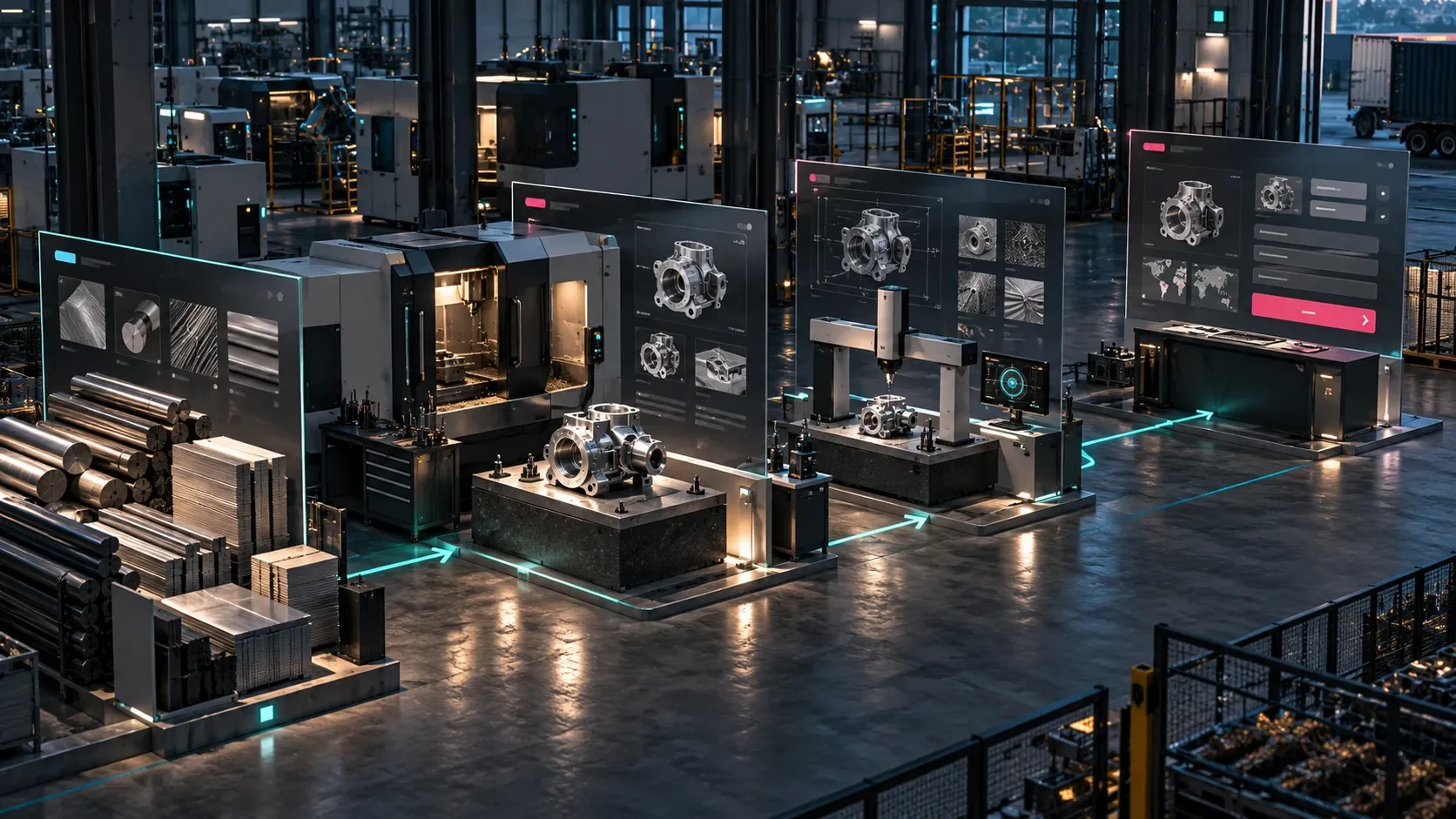
A corporate website for a manufacturing company is an important business development channel that presents the company's production capabilities, technical expertise, product portfolio, and operating capacity to potential customers.
Purchasing decisions in the manufacturing industry often begin with technical evaluations. Potential customers want to understand which products a manufacturer can produce, which materials it works with, its manufacturing processes, quality certifications, and delivery capabilities.
Especially for companies operating in B2B markets, exporting products, or providing manufacturing services to different industries, the website is an important part of this evaluation process.
A procurement manager researching a new supplier, an engineer examining a product's technical specifications, or an international customer evaluating production capacity may all use the company's website.
For this reason, corporate websites for manufacturing companies should be planned to bring together product information, manufacturing capabilities, quality processes, references, and quotation requests.
A manufacturing company's website transforms its technical expertise into a business development experience that potential customers can understand and evaluate.
What Should Manufacturing Companies Expect from Their Websites?
Corporate websites in the manufacturing industry can support different commercial objectives.
Some companies develop and sell products under their own brands. Others provide contract manufacturing, custom component production, or outsourced manufacturing services. Some supply components regularly to original equipment manufacturers or distributors.
The company's business model determines which content and features its website requires.
Which objectives can a corporate website support?
Reaching new B2B customers
Increasing visibility in international markets
Presenting manufacturing capabilities
Showcasing product catalogs
Sharing technical documentation
Demonstrating quality and certification processes
Introducing production facilities and machinery
Collecting dealer or distributor applications
Receiving technical quotation requests
Highlighting experience across different industries
For example, a company providing CNC machining services may prioritize manufacturing methods, machinable materials, dimensional ranges, technical capabilities, and quotation requests.
A manufacturer selling industrial equipment under its own brand may instead focus more on product categories, technical specifications, catalogs, and distributor information.
The first step is to determine which business model the website should support and what types of inquiries the company expects to receive.
Identify Target Customers and Purchasing Processes
Visitors to manufacturing company websites may have different roles and responsibilities.
A procurement specialist may focus on pricing, supply, and delivery, while an engineer examines technical specifications and manufacturing standards.
A senior executive may evaluate the manufacturer's experience, capacity, and opportunities for long-term collaboration.
Which visitor groups might the website serve?
A manufacturing company's website may attract:
Procurement managers
Technical purchasing specialists
Mechanical and manufacturing engineers
Research and development teams
OEM customers
Dealers and distributors
International buyers
Supplier evaluation teams
Project managers
Potential employees
Pages and navigation paths should be designed so that each group can access the information it needs.
For example, a technical buyer may move from a product detail page to a technical drawing, then review the company's manufacturing capabilities before submitting a quotation request.
A potential distributor may follow a different journey through the product portfolio, international markets, partnership model, and application form.
We explore how different visitor needs can shape website architecture in How to Plan a Corporate Website for Different Customer Groups.
How Should Manufacturing Capabilities Be Presented?
Manufacturing capabilities are among the most valuable content areas on a manufacturing company's corporate website.
Potential customers want to understand whether the company can manufacture products that meet their specific requirements.
For this reason, manufacturing methods, technologies, supported materials, and production capacity should be presented through a clear content structure.
What should a manufacturing capabilities page include?
Depending on the company's activities, the following information may be presented:
Manufacturing methods
Machinery and equipment
Production lines
Supported materials
Component dimensions
Technical tolerances
Surface treatments
Assembly and packaging capabilities
Prototype manufacturing
Serial production capabilities
Quality control processes
Production locations
For example, a company manufacturing precision metal components may create separate content sections for CNC turning, milling, grinding, and relevant surface treatments.
Each manufacturing method can include its own explanation, application examples, suitable materials, and technical capabilities.
How should production capacity be presented?
Information about production capacity should be current and verifiable.
Depending on what the company chooses to disclose, it may present machinery counts, production area, manufacturing methods, capacity ranges, and quality control infrastructure.
Supporting this information with photographs, technical explanations, and real manufacturing examples helps visitors evaluate the company.
For example, showing actual measuring equipment and the quality control environment of a precision component manufacturer helps communicate its technical capabilities.
How Should the Product Catalog and Category Structure Be Organized?
Catalog structure is particularly important for manufacturing companies that develop their own products or offer multiple product groups.
Users may want to explore products by category, application, technical specifications, or product code.
The catalog should therefore be organized around purchasing habits within the relevant industry.
How can product categories be defined?
Depending on the manufacturing sector, category structures may be based on:
Product family
Application
Material
Technical specifications
Industry
Product series
Dimensions
Capacity
Compatible equipment
Standards or classifications
For example, a manufacturer of industrial fasteners may organize its products under screws, nuts, bolts, and custom fastening components.
A machinery manufacturer may classify products according to manufacturing processes, operating capacity, or target industries.
When defining categories, it is also useful to consider the terminology customers use when searching for products.
What information should product listings display?
Product cards may include:
Product name
Product code
Product image
Product series
Key technical specification
Related documentation
Link to product details
Quotation request action
To make the catalog easy to maintain, category and product data should be connected to the content management system.
How Should Technical Product Pages Be Prepared?
In manufacturing, product detail pages are valuable sources of information that directly support purchasing decisions.
Technical specifications, applications, dimensions, materials, and related documents should be easy to access.
When this information is structured correctly, customers can evaluate product suitability and proceed toward requesting a quotation.
What information should a technical product page contain?
Depending on the product type, the following fields may be useful:
Product name and code
Product description
Applications
Technical specifications table
Dimensions
Material information
Surface and coating options
Operating conditions
Applicable standards
Product images
Technical drawings
PDF catalog
Installation or operating documents
Related products
Technical quotation form
For example, an industrial valve product page may display diameter, pressure class, material, and connection type in a structured table.
This helps technical users access the information they need quickly.
How should technical documents be managed?
PDF catalogs, technical drawings, user manuals, and conformity documents can be linked to relevant products.
Document version numbers, update dates, and applicable product models should be clearly identified.
When a new product revision is released, the administration panel should allow the related files to be updated through an organized document structure.
Some technical files may be available for direct download, while documents requiring customer accounts or specific permissions can be provided through controlled access.
How Should Factories, Machinery, and Production Environments Be Presented?
Potential customers may want to see the manufacturer's facilities and production environment.
Factory photographs, machinery, production lines, and quality control areas help make the company's operations more tangible.
Visual content should therefore be considered an important part of the corporate website.
Which types of visuals can be used?
Factory exterior photographs
Production line images
Machinery and equipment
Manufacturing stages
Quality control environments
Measuring instruments
Detailed product photography
Storage and shipping areas
Factory introduction videos
Images should represent the company's current production environment.
Real facility photography can be particularly helpful for international customers evaluating a manufacturer's operational capabilities.
How should video content be planned?
Short factory introduction videos or footage showing manufacturing processes can help communicate a company's expertise.
These videos may present the general facility environment, production stages, technologies used, and quality control processes.
Video compression, preview images, and loading strategies should be planned to maintain website performance.
How Should Quality Certifications and Documents Be Presented?
Quality management and technical conformity documents are important parts of supplier evaluation in manufacturing.
Depending on the company's activities, relevant documentation may include quality management certifications, product conformity documents, test reports, or records associated with industry-specific standards.
These documents should be presented in an organized and accessible format on the corporate website.
What should a quality page include?
Quality policy
Quality control processes
Testing and measurement capabilities
Certifications held by the company
Product conformity documents
Inspection and verification processes
Relevant standards
Document download area
For example, when displaying an ISO certification held by the company, the actual certification scope, validity, and issuing organization should be accurately represented.
For product-specific certifications, the applicable product, model, or manufacturing process should be clearly identified.
This structure helps procurement teams access the information they need during supplier evaluations.
How Should B2B Quotation Forms Be Designed for Manufacturing Companies?
A quotation form is an important starting point for commercial relationships on manufacturing company websites.
More detailed information may be required for custom manufacturing, technical component production, and bulk purchasing.
For this reason, quotation forms may need to collect more information than a standard contact form.
The form should help customers communicate their requirements clearly from both technical and commercial perspectives.
Which fields can be included in a technical quotation form?
Depending on the manufacturing model, the following fields may be considered:
Full name
Company name
Business email
Phone number
Country
Relevant product or manufacturing service
Product code
Requested quantity
Material information
Technical dimensions
Target delivery date
Technical drawing or file upload
Project description
For example, a customer requesting CNC component manufacturing may upload a technical drawing and provide the material type, tolerance requirements, and estimated order quantity.
For a standard catalog product, the product code, quantity, and destination country may be more relevant.
How can forms be separated by inquiry type?
Different quotation and contact flows may be created according to the company's business model:
Product quotation
Custom manufacturing request
Contract manufacturing inquiry
Distributor application
Technical information request
General contact
Routing each form to the relevant team makes inquiry management more organized.
We explain the main decisions involved in quotation form design in How Should a Quotation Form Be Structured on a Corporate Website?.
How Should Multilingual Websites Be Planned for Manufacturing Exporters?
For manufacturing companies operating internationally, a multilingual corporate website helps customers in different markets evaluate the business.
Procurement teams from different countries can review product details, manufacturing capabilities, documentation, and contact information in their preferred languages.
The multilingual structure should therefore be planned around the company's target markets.
Which content should be translated?
The following areas can be prioritized for a multilingual manufacturing website:
Homepage
About Us
Manufacturing capabilities
Product categories
Product details
Technical explanations
Quality processes
Export and logistics information
References
Quotation forms
Contact pages
Accurate technical terminology is especially important in this context.
For example, the internationally recognized terms for materials, connection types, and manufacturing methods should be used correctly.
Different information may be presented for different countries
Contact details, distributor links, product availability, or commercial collaboration models may vary by target market.
To manage this information consistently, language and market structures should be planned together with the content management system.
From an SEO perspective, page URLs, metadata, and hreflang relationships should also be configured correctly for each language.
We explore the technical and content considerations in more detail in How Should a Multilingual Corporate Website Be Structured?.
How Should Industry Pages and Applications Be Presented?
A manufacturing company may provide the same production technology to several industries.
For example, a metalworking company may serve automotive, energy, machinery, defense, or industrial equipment markets.
In this case, industry-specific pages help customers understand which manufacturing capabilities are relevant to their needs.
What should an industry page contain?
Brief introduction to the industry
Relevant manufacturing services
Product and component examples
Technical requirements
Materials used
Quality and conformity information
Relevant project examples
Quotation request
For example, a company supplying the automotive industry can explain its relevant component manufacturing capabilities and technical processes.
A page targeting the energy sector may highlight applicable materials, manufacturing methods, and product applications.
Industry pages should be based on the company's actual and verifiable scope of work to support content credibility.
How Should References and Manufacturing Projects Be Presented?
References are valuable content that makes a manufacturing company's experience more tangible.
Potential customers may want to understand which industries the manufacturer has worked with, which types of products it has developed, and how its manufacturing processes are organized.
What information can be presented on project pages?
Industry
Product or component type
Manufacturing method
Material used
Project scope
Technical capabilities
Quality control approach
Manufacturing photographs
Some manufacturing projects involve confidentiality or commercial agreements that restrict which information can be shared.
In these cases, example projects can be prepared around the technical scope and manufacturing capabilities that the company is permitted to disclose.
When project images, technical explanations, and industry information are presented together, visitors can evaluate the company's experience more easily.
We discuss how to organize reference content in How Should References and Project Pages Be Used on a Corporate Website?.
How Should SEO Be Planned for Manufacturing Companies?
SEO strategies for manufacturing companies should be based on the technical and commercial search behavior of potential customers.
A visitor may search directly for a manufacturer, research a specific manufacturing method, or look for a product with defined technical characteristics.
The website should therefore include pages that address different search intents.
Which search groups can be considered?
Manufacturing service searches
CNC machining
Precision component manufacturing
Plastic injection molding
Metal parts manufacturing
Contract manufacturing
Product-focused searches
Product name
Product code
Technical product category
Product series
Searches based on material or dimensions
Supplier searches
Manufacturing companies
OEM manufacturing
Contract manufacturing services
Industrial suppliers
Export-oriented manufacturer searches
Which pages should be prepared for SEO?
Manufacturing service pages
Product category pages
Technical product details
Industry pages
Quality and certification pages
Project examples
Technical articles
Frequently asked questions
Every page should address a clear search intent.
Internal links between technical content and product pages can help visitors progress from the research stage toward requesting a quotation.
How Should Mobile Experience and Website Performance Be Planned?
Manufacturing company websites can contain extensive technical content.
Product catalogs, high-resolution photographs, specification tables, drawings, certificates, and PDF documents may all affect website performance.
The use of technical content and website speed should therefore be considered together.
Which performance areas require attention?
Image optimization
Modern image formats
Appropriate image dimensions
Organized PDF delivery
Mobile-friendly technical tables
Product filtering performance
Fast category navigation
Easy-to-use forms
Mobile file uploads
Core Web Vitals measurements
Technical specification tables should remain readable on mobile devices.
Wide tables may use horizontal scrolling or alternative responsive layouts. PDF catalogs and drawings should also open conveniently across devices.
File upload fields within technical quotation forms should be evaluated for mobile usability.
How Should the CMS and Product Management Infrastructure Be Built?
Manufacturing companies' product portfolios and technical documents can change over time.
New products may be introduced, existing technical specifications may be updated, new certifications may be published, or manufacturing capabilities may expand.
The website's content management system should support these ongoing updates.
Which modules can be included in the administration panel?
Page management
Product categories
Product details
Technical specification fields
Document management
Manufacturing capabilities
Industry pages
References and projects
Quality certifications
Multilingual content management
Quotation form submissions
SEO fields
User permissions
Product data can be managed centrally
For example, a product's technical specifications, catalog links, and images can be stored within a single product record.
The same product can then appear on different category or industry pages.
When its technical information is updated, the related pages can use the same current data.
This structure makes content management easier, particularly for companies with extensive product catalogs.
Quotation Requests Can Be Connected to CRM and Sales Processes
Transferring quotation requests from a corporate website into the sales process is an important step in B2B customer acquisition.
Inquiries related to products or manufacturing services can be routed to the relevant departments, tracked through defined statuses, and transferred to an existing CRM system.
Which steps can be planned for the quotation process?
A visitor completes a technical quotation form.
Related files and product information are recorded.
The inquiry is routed to the appropriate sales or technical team.
Required information is reviewed.
The inquiry enters the evaluation stage.
The team contacts the customer.
A quotation is prepared.
The quotation status is tracked.
When the website is connected to a CRM system, the inquiry source, relevant product category, and activity history can be managed together.
This helps sales teams track new business opportunities more systematically.
How Should Website Business Development Performance Be Measured?
After launching a manufacturing company's website, the business should track which pages and content generate customer inquiries.
Measurement helps evaluate how product and service pages contribute to commercial objectives.
Which metrics can be tracked?
Organic search traffic
Product category visits
Technical product page views
Manufacturing capability page visits
Catalog downloads
Certification page visits
Quotation form starts
Quotation form submissions
Inquiries containing file attachments
Website visits from export markets
Visitor behavior by language
Inquiries generated by industry pages
For example, if a manufacturing service page attracts significant traffic and generates qualified quotation requests, additional technical content and project examples may be prepared for that service.
Measurement allows the website's development plan to evolve according to actual user needs.
How Should a Manufacturing Website Project Begin?
When preparing a corporate website for a manufacturing company, the first step is to clarify its activities, product structure, and customer expectations.
This preparation helps define the project scope and content architecture more accurately.
What information can be prepared before the first meeting?
Company activities
Manufacturing methods
Product groups
Target industries
Target countries
Customer groups
Factory and machinery information
Quality certifications
Existing product catalogs
Technical documentation
Photography and video archives
ERP or CRM systems currently in use
Quotation collection requirements
Content management expectations
Based on this information, the page architecture, design approach, CMS structure, multilingual content, technical catalog, and quotation flow can be planned.
When defining the scope of the website project, the company's immediate requirements and long-term growth objectives should be considered together.
Codezone Approach
At Codezone, we develop corporate websites for manufacturing companies with the goal of making their technical capabilities clear and accessible to potential customers.
We begin by examining the company's manufacturing model, product groups, industries served, and target customer types. Based on this information, we define how manufacturing capabilities, technical catalogs, quality content, and quotation flows should be presented.
During the design process, we establish a visual language that highlights the factory's authentic character, manufacturing technologies, and technical product details. We organize the company's existing photographs, videos, and technical documents according to the page structure.
On the software side, we build a CMS that allows company teams to manage product information, catalogs, quality documents, and multilingual content. Where required, we design quotation workflows that can connect with CRM platforms and existing business systems.
This approach creates a sustainable digital communication infrastructure that clearly presents the manufacturer's technical capabilities, helps reach customers in different markets, and supports B2B quotation processes.
Conclusion
When planning a corporate website for a manufacturing company, the company's production capabilities, product portfolio, quality processes, and target customer groups should form the foundation.
Technical product pages, catalogs, certifications, factory imagery, industry content, and multilingual features help potential customers evaluate the company.
B2B quotation forms, CRM integrations, and measurement capabilities strengthen the website's contribution to business development.
A well-planned manufacturing website clearly communicates the company's technical expertise in a digital environment. It helps potential customers in domestic and international markets explore manufacturing capabilities, find relevant products or services, and submit quotation requests.
Frequently Asked Questions
Which pages should a manufacturing company's website include?
A manufacturing company's website may include a homepage, About Us, manufacturing capabilities, product categories, technical product details, industries, quality certifications, factory introduction, references, and contact pages. The structure should reflect the company's manufacturing model.
Should product prices be displayed on a manufacturing company's website?
This depends on the company's sales model. Prices may be displayed for standardized products with fixed pricing. Technical quotation requests may be more appropriate for custom manufacturing, project-based production, or bulk supply.
Do exporting manufacturing companies need multilingual websites?
Content in the languages of target markets helps international customers evaluate manufacturing capabilities, products, and technical documentation. Language options should be planned according to the company's commercial objectives.
Can technical drawings and PDF catalogs be shared through the website?
Yes. Technical drawings, product catalogs, user manuals, and quality documents can be linked to relevant products. Where necessary, access may be controlled through customer accounts or permissions.
Can a manufacturing company's website generate new customers?
Appropriate SEO structure, clear manufacturing capability pages, technical product content, and accessible quotation flows can help potential B2B customers reach the company. Inquiry quality and progress through the sales process should be measured regularly.
Can a manufacturing company's website integrate with ERP or CRM software?
Yes. Where supported by the relevant systems, product records, catalog information, customer inquiries, and other operational data can be connected to ERP or CRM platforms.