
How to Plan an E-Commerce Site? A Beginner's Guide for Businesses

What decisions should be made before setting up an e-commerce site? A comprehensive beginner's guide covering product structure, infrastructure, payment, shipping, performance, and operational processes.
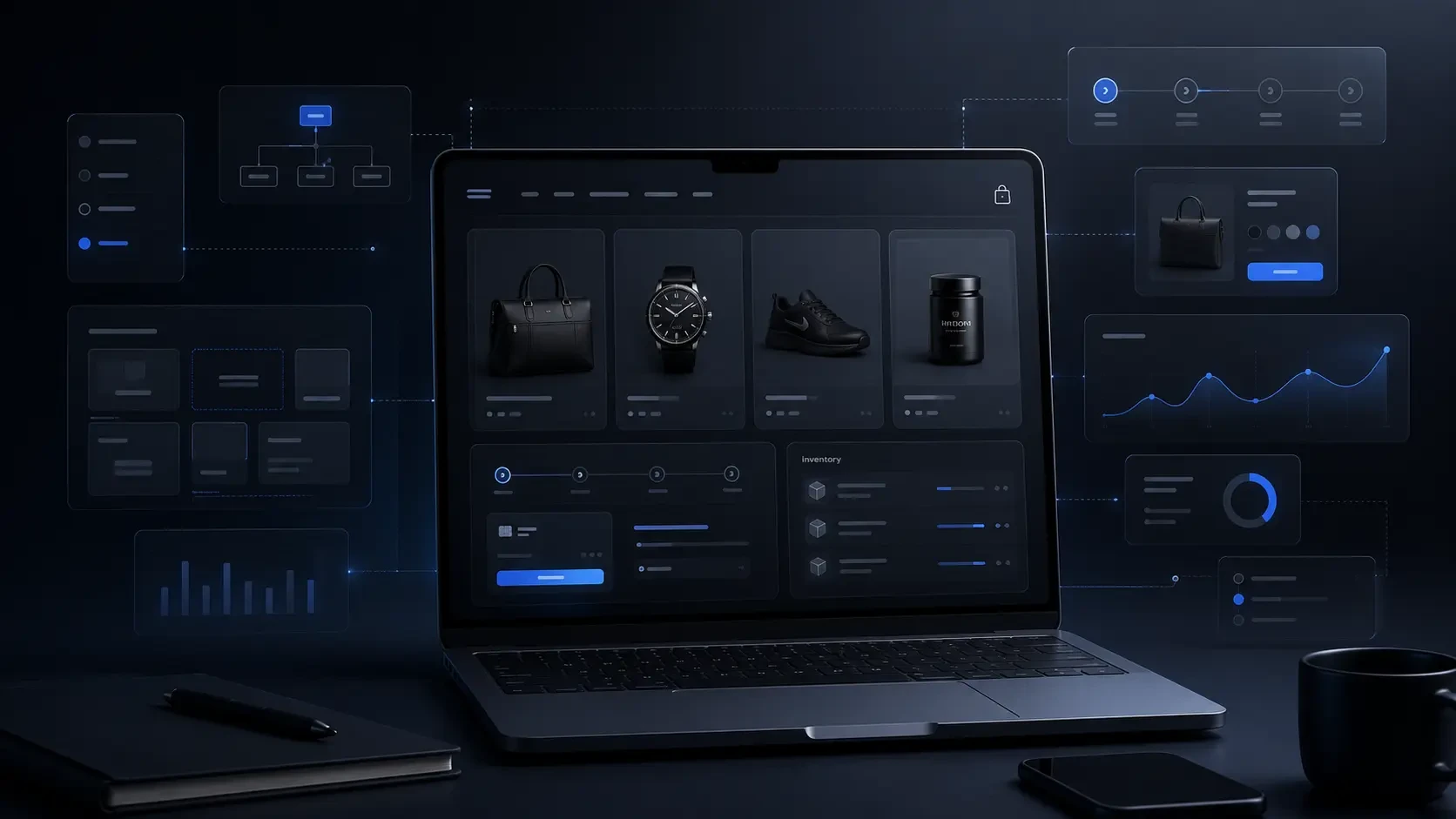
Opening an e-commerce site is much more than uploading products to the internet and enabling payment features.
A well-planned e-commerce experience considers how products will be found, how customers will decide, how securely payments will proceed, how orders will be managed, and how the infrastructure will evolve as the brand grows.
Therefore, seeing the e-commerce project only as a website is incomplete.
An e-commerce site is a digital sales channel where sales, marketing, content, inventory, operations, customer service, and technology processes intersect.
Making the right decisions at the start significantly reduces future costs, technical limitations, and operational burden.
In this guide, we will address the key areas that need to be planned before setting up an e-commerce site.
An E-Commerce Site is More Than a Showcase
The primary purpose of a corporate website is often to convey the brand and build trust. The task of an e-commerce site goes a step further: It must ensure that the user finds the product, evaluates it, trusts it, and completes the purchase.
Meanwhile, things continue on the team side.
Products are added. Stocks are updated. Orders are prepared. Shipments are tracked. Returns are managed. Campaigns are created. Customer questions are answered.
Therefore, when planning an e-commerce project, the question 'how will the site look?' is not enough.
These questions are as important as design:
How will customers find the products?
Is the product variety and category structure suitable for growth?
Will campaign management be easy?
How manageable is the post-order process for the team?
Will the customer feel secure enough during the payment stage?
Will the infrastructure adapt when new sales channels are added?
Good e-commerce experiences appear simple to the user. However, behind this simplicity lies a well-planned system.
Clarify Business Goals Before Starting
Before moving on to technology or design selection, it is necessary to clarify what the e-commerce project should achieve from a business perspective.
Not every brand sells with the same goal.
For some businesses, the priority is reaching new customers. For others, it may be more important to increase repeat purchase rates, support sales in physical stores, or digitize the wholesale process.
How Will You Measure Success?
Success on an e-commerce site is not measured solely by total revenue.
Some important metrics that can be tracked include:
Visitor purchase rate
Average cart value
Cart abandonment rate
Repeat purchase rate
Add-to-cart rate from product page
Mobile vs. desktop conversion difference
Campaign traffic conversion rate
These metrics show which areas need improvement after the site goes live.
Setting a clear goal at the start ensures that design, content, infrastructure, and marketing decisions progress in the same direction.
Know Your Target Audience and Buying Behavior
Not every product is sold in the same way.
The buying journey of a fast-consuming product differs from that of a high-priced product requiring research. Some customers want to see detailed technical specifications of the product. Others do not decide without examining real user reviews, return conditions, or delivery time.
Therefore, the following topics should be clarified:
How long does it take for the customer to decide to purchase the product?
What is the most important information influencing the decision?
What are the most frequently asked questions by customers?
Is mobile usage or desktop usage more dominant?
Is there a high potential for repeat purchases?
Is it necessary to compare products?
The answers to these questions directly affect the information architecture of the e-commerce site.
Plan Product and Category Structure from the Start
One of the most common issues in e-commerce sites is that categories and filters become insufficient as the number of products increases.
A structure that seems sufficient for ten products at the start may make it difficult for users to find what they are looking for when hundreds of products are reached.
Therefore, the product structure should be planned not only according to today's catalog but also considering growth scenarios.
Product Information is Part of the Sales Process
A product page does not consist only of a product photo, price, and purchase button.
Every detail that helps the user make a decision is important:
Product name and description
Technical specifications
Size, measurement, or variation information
Stock status
Delivery information
Return conditions
Real product images
Usage scenarios
Frequently asked questions
Related or complementary products
When product information is insufficient, the customer postpones the purchase decision or turns to customer service.
Well-prepared product pages increase conversion rates and reduce the question burden on the operations team.
Categories and Filters Should Guide the User
Product categories should be created based on user search behavior, not the brand's internal organization.
The user may be searching for products in need-focused ways like 'new season', 'for office', 'gift', 'waterproof', or 'under 1000 TL'.
Therefore, the category structure and filters should answer this question:
How does the user find the product in the quickest and most understandable way?
Filters are not just a technical feature. When used correctly, they become part of the sales experience.
User Experience and Purchase Flow
In e-commerce, user experience is a much broader concept than just allowing the visitor to navigate the page comfortably.
How does the user discover the product, evaluate alternatives, hesitate at which point, and how easily do they reach the payment stage?
Each of these questions affects the conversion rate.
The Homepage is Not a Campaign Board, It's a Guidance Area
When the homepage tries to convey everything at once, it can tire the user.
Instead, the task of the homepage is to direct the user to the right category, campaign, or product.
A good e-commerce homepage typically presents the following in a balanced manner:
The brand's main promise
Featured categories
Current campaigns
New or best-selling products
Trust elements
Content or inspiration areas
Guidance for quick access
The goal is not to overwhelm the user with information but to guide them to the next right step.
Cart and Payment Flow Should Be as Simple as Possible
A user who adds a product to the cart is close to making a purchase decision. At this stage, unnecessary steps, unclear shipping fees, or complex form fields can increase the abandonment rate.
In a good payment flow, the following points are important:
The total amount is clearly visible
Shipping fees are not a surprise
Reliable payment methods are offered
Address and contact information are easy to enter
It is easy to use on mobile
Error messages are understandable
Delivery and return information is visible
On the payment page, the user should be given a sense of a process completed with confidence, not just quick progress.
Ready E-Commerce Infrastructure or Custom Software?
The answer to this question varies according to the needs of the business.
Ready e-commerce infrastructures can be a good option for brands that want to start quickly. They can provide a logical foundation, especially for businesses with a limited number of products, using standard sales flows, and wanting to go live in a short time.
Custom development comes to the fore where the standard structure is insufficient.
For example, the following needs may require a more flexible architecture:
B2B sales processes
Custom pricing rules
Dealer or user roles
Complex product configurations
Multi-warehouse management
ERP or CRM integrations
Membership-based sales models
Very high traffic expectations
Brand-specific purchase flows
Here, the right question is not 'which solution is better?'.
The right question is:
Which infrastructure will your business model, growth plan, and operations progress more healthily with?
Plan Payment, Shipping, and Invoice Processes from the Start
For the customer, the payment screen may be a few seconds of experience. However, from a business perspective, this process is connected to orders, inventory, shipping, invoices, returns, and customer service.
Therefore, integrations in the e-commerce project should not be seen as small details added at the end of the project.
The areas that need to be evaluated at the start are:
Which payment methods will be offered?
Are options like installment, cash on delivery, or digital wallet needed?
Which shipping companies will be worked with?
How will shipping tracking information be communicated to the customer?
Which system will manage the invoice processes?
How will return and exchange requests be received?
How will stock information be synchronized across different channels?
Planning these processes from the start reduces the manual workload of teams and ensures a more consistent customer experience.
SEO, Performance, and Trust Should Be Planned from Day One
For e-commerce sites, organic traffic is one of the important sources of long-term growth.
However, SEO is not just about adding keywords to product titles.
Technical infrastructure, category structure, product pages, images, URL structure, and page performance should be evaluated together.
Speed is Part of the Purchase Experience
Slow-loading category or product pages can cause users to leave without examining the products.
Especially on mobile devices, performance is directly related to image optimization, reducing unnecessary code, proper caching, and a fast infrastructure.
The goal in e-commerce performance is not just to achieve a technical score.
The goal is to ensure that the user reaches the desired product, cart, and payment step without delay.
Trust Elements Should Be Visible
Users pay attention to trust signals, especially when shopping with a brand for the first time.
These can include:
Clear contact information
Transparent delivery and return policies
Secure payment infrastructure
Real product images
Up-to-date company information
Easily accessible customer support
Consistent design and content language
Trust is not created by a single badge or logo. It is consistently conveyed throughout the site.
The Real Process Begins After Going Live
When the e-commerce site goes live, the project is not complete.
The real value is created with post-launch data.
Which products are viewed the most? Which categories convert? At which stage do users abandon the cart? Which campaigns are effective?
The answers to these questions guide the continuous improvement of the site.
Some topics that need to be regularly addressed post-launch include:
Product and category performance
Conversion rates
Search behaviors
Mobile experience
Cart abandonment rate
Campaign pages
Site performance
Content and SEO efforts
Technical updates
Customer feedback
Good e-commerce projects evolve by measuring and learning after the first version.
Checklist Before Launching the E-Commerce Site
Product and Content
Are product titles and descriptions complete?
Do images look high-quality on mobile and desktop?
Are variations, stock information, and prices correct?
Is the category structure understandable for the user?
Are return, delivery, and frequently asked questions visible?
Purchase Flow
Do cart operations work smoothly?
Have payment methods been tested?
Are shipping fees and delivery times clear?
Have coupon and campaign scenarios been checked?
Has the mobile payment experience been tested?
Technical Infrastructure
Has page speed been tested?
Have error pages and empty states been planned?
Have analytics and conversion tracking been set up?
Are sitemap and robots.txt ready?
Are security, backup, and access processes clear?
Operations
Are order notifications reaching the right people?
Have invoice and shipping processes been tested?
Has the return and customer support process been defined?
Can the team use the management panel comfortably?
Codezone's E-Commerce Approach
In e-commerce projects, we try to understand the workflow first, not the screens.
How will products be managed? At which stage will the customer want to see which information? How will the process work from order to delivery? Which areas will the team be able to manage without technical support?
Focusing only on design or technology without clarifying these questions can create unnecessary complexity in the future.
At Codezone, we approach e-commerce projects as digital products where user experience, performance, content management, and operations work together.
Our goal is not just to create a beautiful-looking store; it is to build an infrastructure where your customers shop comfortably, your team manages easily, and continues to develop as your business grows.
Conclusion
Planning an e-commerce site is a more comprehensive process than preparing a product catalog.
The right product structure, understandable category architecture, simple payment flow, reliable integrations, high performance, and sustainable operations complement each other.
Decisions made at the start directly affect your sales experience, team efficiency, and long-term growth capacity.
Therefore, planning your e-commerce project not only with the question 'how quickly can we go live?' but with the question 'how will this infrastructure accompany us as our business grows?' provides a healthier start.
Frequently Asked Questions
How Long Does It Take to Set Up an E-Commerce Site?
The duration varies depending on the number of products, design scope, integrations, availability of content, and special needs. While a basic structure can be prepared in a short time, special workflows and integrations may require more comprehensive planning.
Is Ready E-Commerce Infrastructure Sufficient for Every Business?
No. Ready infrastructures can provide a good start for standard sales models. However, businesses with special pricing, dealer systems, complex product structures, or different operational needs may require more flexible solutions.
Why is Mobile Experience Important on an E-Commerce Site?
Many users conduct product research and make purchases from mobile devices. A slow or complex experience on mobile can cause users to leave the purchase process without completing it.
When Should E-Commerce SEO Start?
SEO should not be seen as a separate effort to start after products are published. Category structure, product information, URL structure, image optimization, and technical infrastructure should be planned from the beginning.
Does the E-Commerce Site Continue to Develop After Going Live?
Yes. The e-commerce site should be regularly improved based on sales data, user behaviors, and operational needs. The best results are achieved with teams that measure and improve after going live.