
How Long Does It Take to Complete a Corporate Website?

How long does it take to complete a corporate website? Examine the impact of page scope, content preparation, design, CMS, integrations, feedback process, and publication preparations on the project timeline.
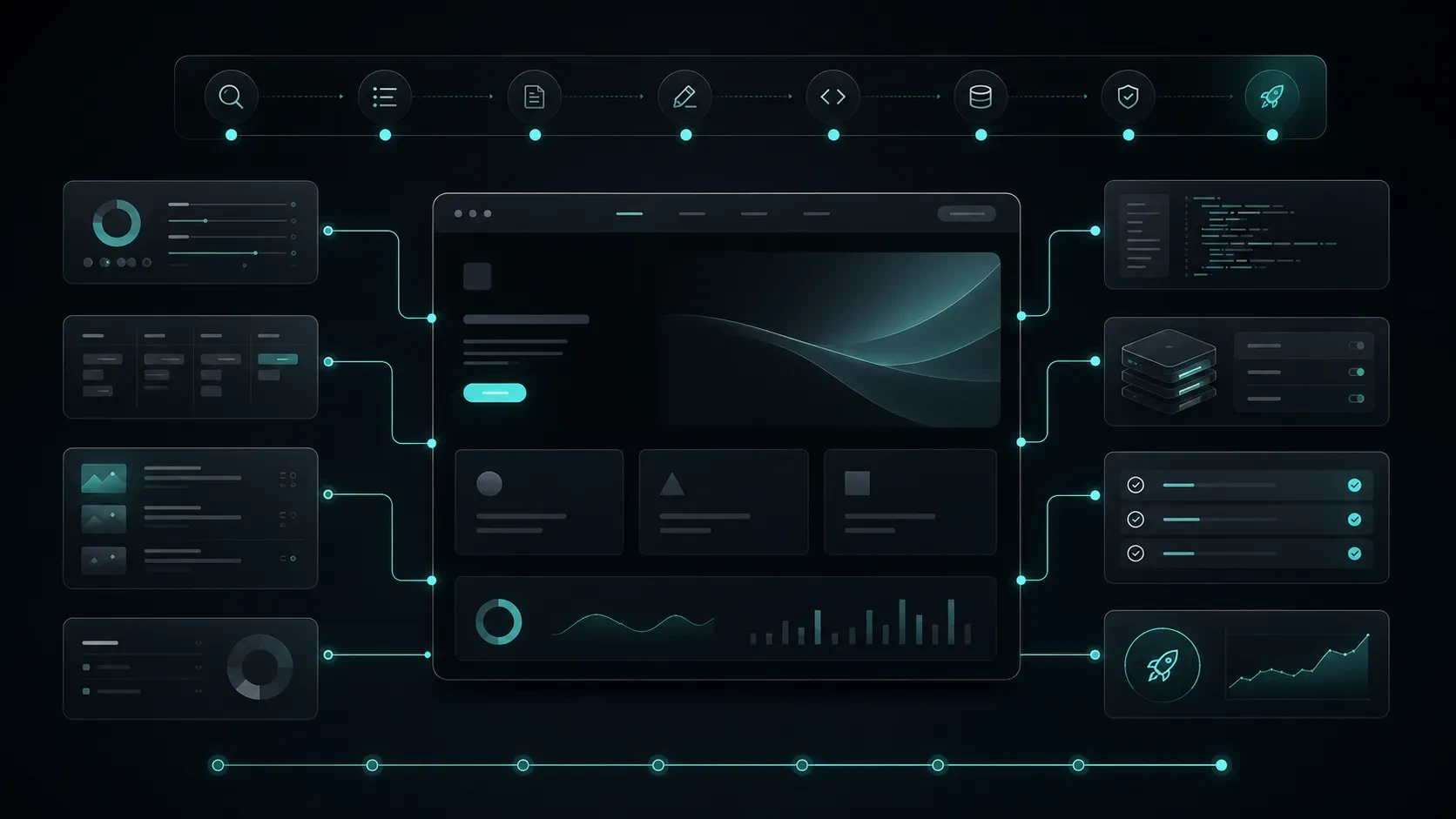
The duration of a corporate website project is not solely dependent on the number of pages. Content preparation, design needs, multiple languages, CMS, integrations, feedback process, and testing phases collectively shape the project timeline.
One of the most frequently asked questions in a corporate website project is quite clear:
How long will it take for the website to be ready?
There is no single answer to this question. Because the services each company wants to convey, the users they target, content preparation, technical needs, and approval processes are different.
Some projects have a few basic pages, ready-made content, and a clear visual identity. In others, it is necessary to create a new brand narrative, re-plan the service structure, add multilingual support, set up a content management system, or integrate with existing tools.
Therefore, the website timeline does not consist solely of design and software time.
A well-planned process considers discovery, information architecture, content, design, development, testing, and publication preparation together. This approach creates a more realistic timeline and reduces the need for revisions after publication.
In this guide, we will address the topics that affect the duration of corporate website projects and the points to consider in project planning.
What Are the Stages of a Corporate Website Project?
A corporate website project often appears at first glance to be just a design and coding task.
However, for a good result, the process should be considered more broadly. The website brings together the brand's narrative, services, content, user experience, and technical infrastructure.
A healthy project plan generally consists of the following stages:
Determining goals and project scope
Evaluating the current site or existing content
Planning the page structure and information architecture
Preparing or editing content
Determining the design direction
Technical development
CMS or management panel setup
Mobile compatibility, performance, and form tests
Content entries
Publication preparations and final checks
These stages may progress in parallel in some projects. For example, while content preparation continues, work can be done on the design system. However, moving to the next step without finalizing certain project decisions may require rework later.
Therefore, a good timeline includes not only the “publication date” but also the decision and delivery points that will make this date possible.
How Do Project Scope and Page Structure Affect the Duration?
The first topic that determines the website duration is the project scope.
A five-page corporate promotional site does not progress on the same timeline as a website with a multi-service structure, blog infrastructure, case study area, career page, and different user flows.
Some areas that affect the scope are:
Basic pages like homepage, about us, services, and contact
Separate detail pages for each service
Projects or case studies
Blog and resource center
Career, open positions, and application flow
Frequently asked questions
Multilingual pages
Campaign or landing page structures
Forms and quote request flows
Product or solution pages
Document, catalog, or media center
The number of pages alone does not explain the duration. Because two pages may not require the same development effort.
For example, a simple “About Us” page can be completed in a shorter time. In contrast, a resource center that requires dynamic filtering, content management, multilingual support, or integration may require more comprehensive planning.
Therefore, in the initial stage, not only “how many pages will there be?” but also “what purpose will each page serve and what functions will it include?” should be addressed.
Why Is Content Preparation an Important Part of the Timeline?
In corporate website projects, content is often one of the areas that require the most decisions.
It is necessary to prepare the company's services, value proposition, team approach, products, references, and frequently asked questions in a way that is easy for the visitor to understand.
No matter how strong the design is, if the content is not clear, the visitor may have difficulty understanding what the company does or why they should get in touch.
The topics that affect content duration are:
Usability of existing texts
Currency of service descriptions
Clarity of brand language
Preparing text for new pages
Need for visuals, videos, and documents
Team information and biographies
Reference or project content
Blog starting content
Multilingual translation process
Content approvals
In some projects, a significant portion of the content is ready, and the team only makes edits. In some projects, however, the content strategy needs to be built from scratch.
Therefore, content preparation should not be seen as a detail to be addressed after technical development is completed. When planned at the start of the project, the timeline progresses more controlled.
Design and Brand Identity Process
The design time of a website is not only dependent on the number of screens.
The brand's existing visual identity, design system, colors, typography, photographic language, and digital presence directly affect this process.
If the brand identity is ready and consistent, the design phase can progress faster. However, if the brand language is being updated or the digital appearance is being reconsidered, the visual direction must first be clarified.
In the design process, the following areas are usually shaped:
Overall design direction
Color, typography, and visual usage system
Grid and page layout
Desktop and mobile experience
Homepage and basic page templates
Components and interactions
Forms, CTA areas, and information hierarchy
Content cards, blog structure, and modules
Getting early feedback in this process is important. Once the main design direction is clarified, subsequent pages progress more consistently and quickly.
CMS and Management Panel Needs
A corporate website must remain up-to-date not only on the day it is published but also in the following years.
Content management needs to be practical for new services, team changes, blog posts, campaigns, or announcements.
At this point, the need for a CMS or custom management panel comes into play.
CMS needs that may affect the project duration are:
Blog and resource center
Management of service pages
Team members
Project or case studies
Frequently asked questions
Multilingual content
SEO fields
Visual and media management
Management of form requests
User roles and content permissions
Simple structures that progress with a ready content model can be set up in a shorter time.
However, if content types, associations, authorization areas, or special publication flows are required according to the brand's own working style, CMS planning becomes one of the important parts of the project.
Multilingual Structure and Localization Process
For companies targeting multiple markets, multilingual support does not just mean translating texts.
When the language changes, page lengths, content priorities, user expectations, SEO structure, and even some visual choices may differ.
When planning multilingual support, the following areas need to be clarified:
Which languages will be published?
Will all pages be available in every language?
Who will prepare and approve the translations?
Will separate SEO fields be managed for each language?
In which languages will blog and resource content be published?
What will the language-based URL structure be?
How will new content be transferred to different languages?
A small corporate site in two languages does not progress with the same intensity as a comprehensive structure with content, blog, and service pages in four languages.
Therefore, when the need for multilingual support is clarified at the beginning of the project, the design and technical structure are established more healthily.
Forms, Integrations, and Special Functions
Corporate websites do not always consist of structures that only provide content.
Areas such as quote request forms, CRM connections, calendar integrations, newsletter registrations, payment systems, map services, or special calculation tools can also be included in the project scope.
These types of needs should be addressed in terms of user experience, data flow, error scenarios, and testing processes.
Examples that may affect the duration are:
CRM or email automation connections
Calendar and meeting planning systems
Quote request forms
Multi-step application processes
Career application form and candidate management
Newsletter registration infrastructure
Payment or reservation steps
Map, location, or branch finder structures
Document download areas
Special calculation tools
Third-party API connections
In these areas, the most important issue is not just that the integration works technically.
Where the data from the user will go, how the team will manage this data, and what will happen in case of an error should also be included in the project plan.
Feedback and Approval Processes
One of the most important areas affecting the website timeline is the feedback process.
When design, content, or development outputs are evaluated quickly, the project rhythm is maintained. However, decisions waiting for a long time or conflicting feedback from different teams can directly affect the timeline.
For a healthy feedback process, the following approach is useful:
Determining the decision-makers on the project side from the start
Creating clear approval points for each stage
Collecting feedback in one place
Evaluating revisions according to priority
Handling new ideas separately from the current scope
Ensuring content, design, and technical decisions support each other
The feedback process is important not only for speed but also for quality.
Clear directions received at the right time ensure that both the design and development process progress more robustly.
Testing, Performance, and Publication Preparations
When the website development process is completed, the project is not directly published.
Before publication, user experience, mobile compatibility, form behaviors, performance, SEO fields, and technical connections should be checked together.
The topics that can be evaluated at this stage are:
Desktop, tablet, and mobile view
Behaviors in different browsers
Form submissions and email flows
CMS content entries
SEO titles and descriptions
URL structures and redirects
Visual optimization
Page loading performance
Analytics and conversion tracking
Cookie and privacy areas
Domain, SSL, and publication settings
Error pages and basic security checks
These checks ensure that the site works as expected for both visitors and content teams.
Allocating enough time for publication preparation offers a more controlled experience on the launch day.
Sample Time Intervals for Corporate Websites
Every project is different. Therefore, durations should be considered as sample planning intervals that help understand the scope, not as a fixed commitment.
Basic Corporate Website
A project consisting of a homepage, about us, services, contact, and a few supporting pages, where the content is largely ready, can usually be planned within 1–3 weeks.
This range may vary depending on the design scope, content revisions, and publication preparations.
Comprehensive Corporate Website
Projects with multiple service pages, blogs, case studies, career areas, multilingual support, or more advanced CMS needs are mostly planned within 3–8 weeks.
The preparation of content from scratch or the creation of a new brand narrative can affect this duration.
Web Project with Special Functions
In projects involving customer portals, special calculation tools, CRM integrations, membership structures, reservation flows, or connections with different systems, the duration may require planning of 8 weeks and above depending on the details of the needs.
In such projects, user flows, data structure, and integrations form an important part of the timeline.
The most accurate time estimate can be made after evaluating the project scope, content status, and technical needs together.
Codezone's Approach
At Codezone, we approach corporate website projects as products that clearly convey the brand digitally, are easily managed by teams, and can evolve over time.
In each project, we first evaluate the goals, visitor needs, page structure, content status, and technical requirements together.
This framework creates the project scope, design direction, CMS needs, integrations, and a realistic delivery timeline.
When we conduct design, content, and development processes as part of the same plan, the project not only reaches the publication date but also becomes more ready for growth after publication.
At Codezone, we plan the timeline as a work order that maintains quality, allows for decision-making processes, and progresses in line with the project's goals.
Conclusion
The duration of a corporate website project is not determined solely by the number of pages.
Content preparation, design needs, CMS structure, multiple languages, integrations, feedback process, and pre-publication tests collectively shape the project's timeline.
To progress in a shorter time, it is important to clarify the scope, define content responsibilities from the start, and plan decision-making processes.
For a stronger result, it is necessary to focus not only on the publication day but also on the use and development of the project after publication.
Frequently Asked Questions
How many days does it take to build a corporate website?
The duration varies according to the project scope. While basic corporate websites can be planned in a few weeks; projects with multiple languages, comprehensive content structure, CMS, integrations, and special functions may require a longer timeline.
If the content is ready, will the website be completed faster?
Yes. When service texts, brand materials, visuals, team information, and approval processes are ready, the project progresses more smoothly. Updating or preparing content from scratch holds an important place in the project timeline.
Can website design and software development progress simultaneously?
In many projects, certain stages can progress in parallel. However, when the main information architecture, design direction, and content priorities are clarified, the development process progresses more controlled.
Does multilingual support affect the project duration?
Yes. The number of languages, translation process, content scope in each language, SEO fields, and content management model affect the project timeline.
Can changes be made to the website after publication?
Yes. Thanks to a well-planned CMS or management panel, teams can update content, blogs, service pages, and basic SEO fields. For new features or more comprehensive changes, a separate development plan can be created.