
What is MVP? How to Plan the First Version in a Mobile Application?

What is MVP and how to plan the first version of a mobile application? A basic guide for feature prioritization, user flows, testing process, and product roadmap.
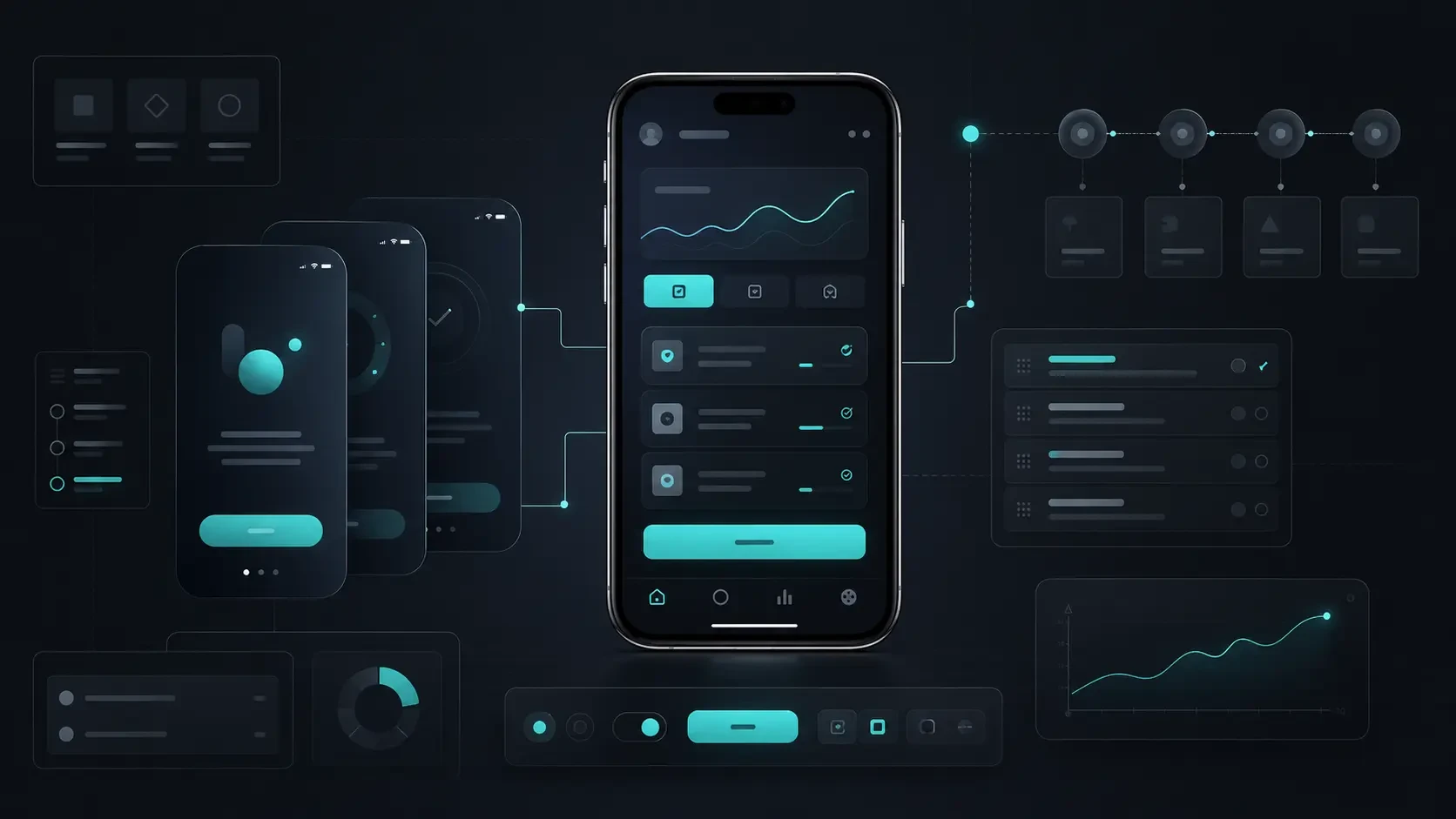
MVP is not just a smaller-scale application. It is the first version that meets a real user need, helps validate the product idea, and bases subsequent development decisions on data.
Most businesses with a mobile app idea face a similar question at the start of the project:
What features should be included in the first version?
The answer to this question directly affects the development time, budget, user experience, and decisions to be made after launch.
MVP, or Minimum Viable Product, is the first version of the product that offers real value to the user. The goal is not to have the application with the fewest features possible. The goal is to correctly provide the essential experience users need, test the product with real usage, and plan future investments more healthily.
A well-designed MVP shows which feature of the application truly generates value. It makes visible where users spend time, which flows they complete, and which areas of the product they expect improvements in.
In this article, we will discuss the MVP approach in mobile applications, how to determine the scope of the first version, and how the product will evolve after launch.
What is MVP?
MVP is the first working version of a product idea that meets users.
This version presents the core value proposition of the product to the user. It clearly shows why the user would open the application, what action they would take, and how they would benefit from this experience.
For example, the main purpose of an appointment application might be to allow users to find a suitable time and quickly create an appointment.
In this case, the following features might be sufficient for the first version:
User registration and login
Service or expert selection
Viewing available times
Creating an appointment
Appointment reminder
Viewing user's appointments
Advanced loyalty systems, social features, personalized recommendations, or detailed reporting can be planned after seeing the product usage data.
The MVP approach is not used to shrink the idea; it is used to focus on the most valuable part of the product in the initial stage.
Why is MVP Important in Mobile Applications?
Mobile application projects can contain many different features simultaneously.
Membership, payment, notifications, maps, messaging, content management, user roles, reporting, and integrations can all be part of the same product. Therefore, defining the boundaries of the first version is important for the healthy progress of the project.
The MVP approach provides several important advantages to businesses.
The First Version Carries a Clearer Purpose
When it is clear what value will be offered to the user in the first version; design, technical development, and content decisions are shaped according to the same goal.
This helps the application offer a more understandable, consistent, and focused experience.
Provides the Opportunity to Progress with User Data
It is possible to predict that a feature will actually be used by users. However, real usage data provides a stronger basis for decision-making.
After the MVP is launched, the following questions can be answered more clearly:
For what purpose do users open the application?
Which screens do they use the most?
Which processes are left incomplete?
What are the areas that ensure users return?
Which features become a priority for the next version?
These data help plan the product roadmap more accurately.
Development Resources Are Used More Efficiently
Instead of developing every idea simultaneously in the first version, focusing on the core flows of the product helps use time and budget more controlled.
Thus, teams can see the areas users value earlier and direct future investments more consciously.
What Features Should Be Included in the First Version?
The scope of the first version should be determined according to the main problem the application aims to solve.
The starting point should be this question:
What is the most important task the user wants to complete when they open this application?
When this task is determined, the core flows of the first version become clearer.
For example, in a mobile application supported by e-commerce, the main flow might be:
User discovers products
Examines product details
Adds to cart
Completes the payment process
Tracks their order
In a field operation application, the main flow might be different:
Employee logs in
Views assigned tasks
Completes the task
Adds necessary visuals or notes
Manager tracks the process
The features included in the first version should ensure the smooth progress of this main flow.
Core Features for the First Version
The following areas are generally evaluated within the scope of MVP:
User registration and login
Basic user profile
Main transaction flow of the application
Notification or information system
Payment or reservation process if necessary
Simple content or data management
Basic control areas needed on the management side
Error, empty state, and loading screens
Analytics and usage tracking
Not all of these areas are necessary for every application. The correct scope should be determined according to the usage scenario of the product.
How Should You Prioritize Features?
It is natural for a mobile application idea to have many features. The important thing is to address these ideas in the right order.
For this, it is useful to divide the features into three groups.
Features to Include in the First Version
These features are necessary for the user to derive the basic benefit from the application.
If the main user flow cannot be completed without these features, they should be included in the first version.
For example, in a reservation product, viewing available times and completing the reservation is a basic need for the first version.
Features to Plan According to Usage Data
These features can enrich the product experience. However, it is healthier to prioritize them after seeing how users interact with the application.
For example:
Personalized recommendations
Advanced filtering
Loyalty points
Friend invitation system
Detailed reporting
Advanced notification scenarios
These features may gain stronger meaning in the second or third version of the product.
Ideas to Evaluate in the Product Roadmap
Some ideas may seem exciting from day one. However, their relationship with the main usage scenario of the product becomes clearer over time.
Instead of completely removing these ideas, it is better to keep them in the product roadmap. They are reevaluated at the appropriate time based on user data and business goals.
User Flows and MVP Scope
A list of screens alone is not sufficient in MVP planning.
What is important is to see the user's journey within the application from start to finish.
For example, when a user opens the application for the first time:
They should be able to understand what the application offers.
They should be able to register quickly if necessary.
They should be able to easily access their main transaction.
They should be able to see what happens when they complete the transaction.
They should be able to clearly understand the next step.
Each step of this flow should be considered along with design, technical infrastructure, content language, and error states.
When user flows are clarified, unnecessary screens and ambiguous features are more easily noticed.
This ensures that the first version is a simpler, more understandable, and purpose-serving product.
Difference Between MVP and Full-Scale Product
The difference between an MVP and a full-scale product is not a difference in quality.
An MVP should also be safe, user-friendly, and ready for publication. The difference emerges in which features the product starts with.
A full-scale product may cover broader user scenarios, advanced automations, detailed reporting, and different user roles from day one.
An MVP, on the other hand, offers a more focused start that prioritizes the most valuable experience for the user and determines the direction of the product with real usage data.
Therefore, the MVP approach can be a strong option, especially in the following situations:
If a new product idea is to be validated
If user behaviors are not yet clear
If the time to market is important
If regular development is planned after the first version
If it is necessary to prioritize among multiple feature ideas
A good MVP does not limit the future of the product. On the contrary, it ensures that subsequent versions progress on a more solid foundation.
What Should Be Measured After MVP is Launched?
After the MVP is launched, the product development process enters a new phase.
The goal at this stage is to understand user behaviors and see which areas of the product generate value.
Some key metrics that can be tracked are:
Number of active users
Return rate after first use
Completion rate of the main transaction flow
Screen transition behaviors
Time spent in the application
Notification interaction rate
Error and crash reports
User feedback
Areas where support requests are concentrated
These data should not be evaluated alone. They become more meaningful when considered along with feedback from users and the business's goals.
The power of MVP is not only in launching the first version but also in determining the next steps of the product more consciously.
Codezone's MVP Approach
At Codezone, we consider MVP planning as the process of creating the strongest initial experience of the product.
In every project, we evaluate together why users need the application, which processes are at the core of the product, and what result the business wants to achieve from the first version.
This evaluation shapes the basic user flows, priority features, technical infrastructure needs, and the product's roadmap after the first version.
As we clarify the product scope, the focus of the teams strengthens, and the first version offers a more consistent experience.
At Codezone, we see MVP not as a quickly released prototype, but as a solid start that creates real value for users and guides the development of the product.
Conclusion
MVP is not an approach used only to reduce scope in the mobile application development process.
When planned correctly; it allows focusing on the real needs of users, testing the product idea in the field, and directing development investments based on data.
Presenting the most important user flows correctly in the first version creates a strong foundation for the future success of the application.
When planning the first version of your mobile application; it is necessary to consider together which features are truly necessary, which actions users will regularly perform, and which data will be tracked after publication.
Frequently Asked Questions
What is the difference between MVP and prototype?
A prototype is usually prepared to show the product idea or screen flows. An MVP, however, is a measurable product version that users can use in a real environment and that offers core value.
Is MVP a low-quality product?
No. MVP is more focused in terms of feature scope. However, it should be a product ready for publication in terms of user experience, security, performance, and the reliability of core flows.
How long does it take to develop an MVP?
The duration varies according to the core user flows of the application, backend needs, target platforms, design scope, and integrations. Creating a clear MVP scope helps make the development plan healthier.
Should a payment system be included in the first version?
If payment is part of the core value flow of the application, it should be included in the first version. If the main purpose of the application is to validate another process, the payment feature can be taken to the next stage.
When should new features be added after the MVP is launched?
New features should be prioritized after evaluating user behaviors, feedback, business goals, and the performance of the current main flow. The goal is not to increase the number of features, but to make the product more valuable for the user.