
React Native or Native App? How to Make the Right Choice for Your Business?

Explore the differences between React Native and native mobile app development. Learn which approach suits your project in terms of performance, device features, development process, and long-term maintenance.
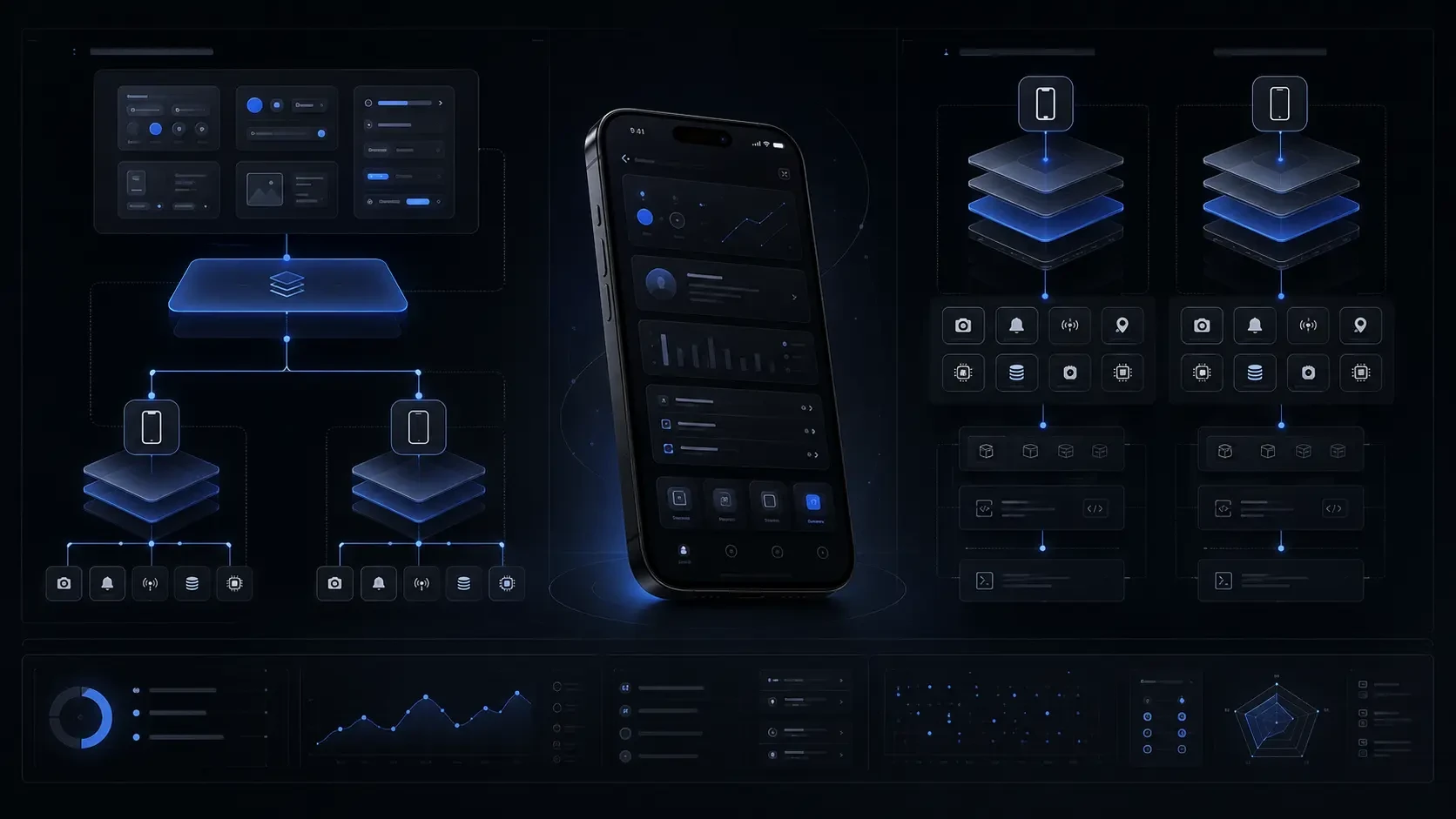
React Native and native development cater to different needs. The right choice should be made based on the app's performance expectations, its relationship with device features, target platforms, and long-term product plan.
One of the most important technical decisions that businesses planning mobile app development face at an early stage is:
Should the app be developed with React Native, or should separate native apps be created for iOS and Android?
It is not possible to give a single answer that applies to everyone for this question.
For some applications, React Native allows for more controlled progress on two platforms and more efficient realization of the product's first version. In some projects, intensive device usage, high performance expectations, or platform-specific experiences make native development a more suitable option.
The goal here is not to apply a specific technology to every project. The goal is to establish a technical foundation suitable for the product's needs.
In this article, we will discuss the fundamental differences between React Native and native development in terms of performance, device features, development process, maintenance, and long-term product planning.
What is the Difference Between React Native and Native Development?
Native development means developing applications with separate technologies for iOS and Android.
On the iOS side, platform-specific technologies like Swift are used, while on the Android side, Kotlin is used. This approach allows the application to work more directly with the operating system and device features.
React Native, on the other hand, makes it possible to create a largely shared application code for iOS and Android through the JavaScript and TypeScript ecosystem.
This does not mean that the two platforms are entirely the same. Depending on the application's needs, platform-specific developments, native modules, or platform-based design decisions may be required for iOS or Android.
However, the fundamental difference is:
In the native approach, iOS and Android applications are developed separately.
In the React Native approach, two platforms are targeted through a common product infrastructure.
This difference directly affects the development plan, team structure, maintenance process, and the speed of bringing the product to market.
Which Projects is React Native Suitable For?
React Native can provide a strong foundation for many products that want to be present on both iOS and Android simultaneously.
It can be an efficient approach, especially in applications where the user experience largely progresses through screens, forms, lists, membership flows, content, reservations, notifications, and API connections.
React Native often becomes a good option in the following types of projects:
Membership and loyalty applications
Reservation and appointment systems
Service platforms
Content and education applications
Event, community, or membership products
E-commerce supported mobile applications
Operational applications for field teams
Management and reporting focused applications
API-based digital products
MVP projects where the first version is desired to be quickly validated
The main advantage of React Native is not just faster development.
It helps create a more consistent product experience between two platforms, manage the development process more easily with a single product team, and benefit from common components as the application evolves.
Especially for companies working with the JavaScript and TypeScript ecosystem on the web side, React Native can make internal knowledge sharing and product development processes more harmonious.
However, React Native should not be the default answer for every project. The application's relationship with the device and performance needs should always be evaluated separately.
Which Projects is Native Development Suitable For?
Native development can provide a stronger foundation in scenarios where the application communicates intensively with the device hardware or where there is a very high performance expectation.
Especially if the success of the application depends directly on utilizing the features offered by the device, the native approach becomes more meaningful.
Native development can stand out in the following needs:
Advanced camera and image processing
High-performance video or audio experiences
Intensive graphics, animation, or game-like interfaces
Bluetooth, NFC, or special physical device connections
Complex offline usage scenarios
Products with intensive map, location, and real-time data tracking
Applications connecting with health, sports, or IoT devices
Platform-specific gestures and user interactions
Need for deeper integration at the operating system level
Here, native development is chosen not because it is "better," but because the product's technical needs require it.
For example, in an application where users scan documents with the camera, process images in real-time, or constantly communicate with special hardware, device performance and platform features play a more central role.
In such scenarios, the native approach may be more suitable for the experience the product aims to deliver.
Performance, Device Features, and User Experience
The most common mistake when choosing technology is evaluating performance solely based on the app's launch speed.
Performance is a combination of many factors such as the fluidity of screen transitions, the way lists work, loading of images, the app's behavior when the network connection is weak, access to device features, and processing intensity.
Applications developed with React Native can offer a strong and fluid experience for many products with the right architecture and application approach.
However, at points where the application requires intensive graphics, camera, video processing, or advanced interaction with device hardware, platform-specific developments or native solutions may become more meaningful.
On the user experience side, technical decisions alone are not decisive.
A good mobile app experience:
Allows the user to quickly understand what to do.
Helps them quickly access basic operations.
Clearly shows waiting, loading, and error states.
Considers the habits of iOS and Android users.
Offers a simple and consistent flow suitable for mobile usage conditions.
The right technology is only a part of a good user experience. Product design, design system, content language, and testing process are as important as technology.
Development Process, Maintenance, and Long-Term Cost
Focusing solely on the initial development time when evaluating mobile app costs can be misleading.
After the app is released, new features, operating system updates, security needs, user feedback, and performance improvements come into play.
Therefore, the following questions should also be considered when making a decision:
How long will it take to add a new feature on the iOS and Android sides?
How will the user experience be kept consistent across two platforms?
How will maintenance and updates be managed?
How will the technical team develop the app in the long term?
Will there be common workspaces with the app's backend and web side?
As the product grows, what needs will the architecture meet?
Since React Native offers a common development approach for two platforms, it can make the maintenance process more manageable for many projects.
In native development, since iOS and Android sides are handled separately, more platform-specific work may be required. In return, the flexibility to directly benefit from the features offered by the platforms is gained.
Instead of choosing the lowest initial cost, it is healthier to consider the product's development needs over the next one or two years.
Questions to Ask Before Making a Decision
Before deciding between React Native or native development, it is necessary to clarify the product's needs before the technology list.
The following questions help simplify the decision-making process:
Will the app be released simultaneously on iOS and Android?
What is the primary operation users will use the app for?
Will the app intensively use device camera, location, Bluetooth, NFC, or other hardware features?
Is there a need for very high graphics, video, or real-time processing?
Does the app need to work offline?
Which features are truly necessary in the first version?
Will the app communicate with the existing web system or backend infrastructure?
How will the team manage the app after release?
How often will new features be added?
What are the business model's goals one or two years from now?
The answers to these questions are more valuable than the debate of "which technology is more popular?"
Because the right choice is the one that aligns with the project's needs.
Codezone's Approach
At Codezone, we consider technology selection as a natural part of the product strategy.
In every project, we evaluate together the problem the product aims to solve, the relationship users will have with the app, and which business process it aims to make more efficient.
The device features the app needs, the basic flows in the first version, recurring user behaviors, backend requirements, and connections to be established with existing systems guide this evaluation.
Thanks to this framework, React Native, native development, or a hybrid approach is determined in a way that suits the product's goals, technical needs, and long-term roadmap.
As Codezone, we use React Native as a powerful tool to develop consistent, sustainable, and product-focused experiences on iOS and Android.
In every project, we position technology as a foundation that strengthens the user experience, is easily managed by teams, and opens up space for the product's development.
Conclusion
Choosing between React Native and native development is not just a technical decision.
This decision affects the product's go-to-market plan, maintenance process, user experience, team structure, and long-term development capacity.
React Native can offer a consistent and efficient product development process on two platforms for many applications.
Native development, on the other hand, may be a more suitable foundation for projects where device features, high performance, or platform-specific experiences are at the core of the product.
The right approach is not to ask "which technology is better?" but to ask "which technology better answers the needs of our product?"
Frequently Asked Questions
Can applications developed with React Native be published on the App Store and Google Play?
Yes. Applications developed with React Native can be prepared and published for both the App Store and Google Play. During the publishing process, the platform's store rules, privacy information, app visuals, and testing requirements should be considered separately.
Is React Native sufficient in terms of performance?
For many membership, content, reservation, service, loyalty, e-commerce, and API-based applications, when applied correctly, it can offer strong performance. However, for applications requiring intensive graphics, advanced image processing, or high-level interaction with device hardware, native development may be more suitable.
Can native modules be used with React Native?
Yes. Depending on the application's needs, platform-specific native modules can be added to a React Native project. This way, while maintaining a common code structure, iOS or Android-specific capabilities can be utilized where necessary.
Is React Native more cost-effective?
The ability to progress with a single codebase can make the development and maintenance process more efficient for many projects. However, the total cost varies depending on the scope of the application, backend needs, integrations, device features, and platform-specific development requirements.
Can an app later be moved from React Native to native development?
Technically, it is possible; however, such a transition may require redevelopment work depending on the scope of the product. Therefore, it is important to evaluate the product's needs and long-term roadmap at the beginning.