
How Should the Scope of a Mobile App’s First Release Be Defined?

The first release of a mobile app should focus on the smallest complete experience that delivers real value to users. Core journeys, backend requirements, admin needs, integrations, and analytics should be planned together.
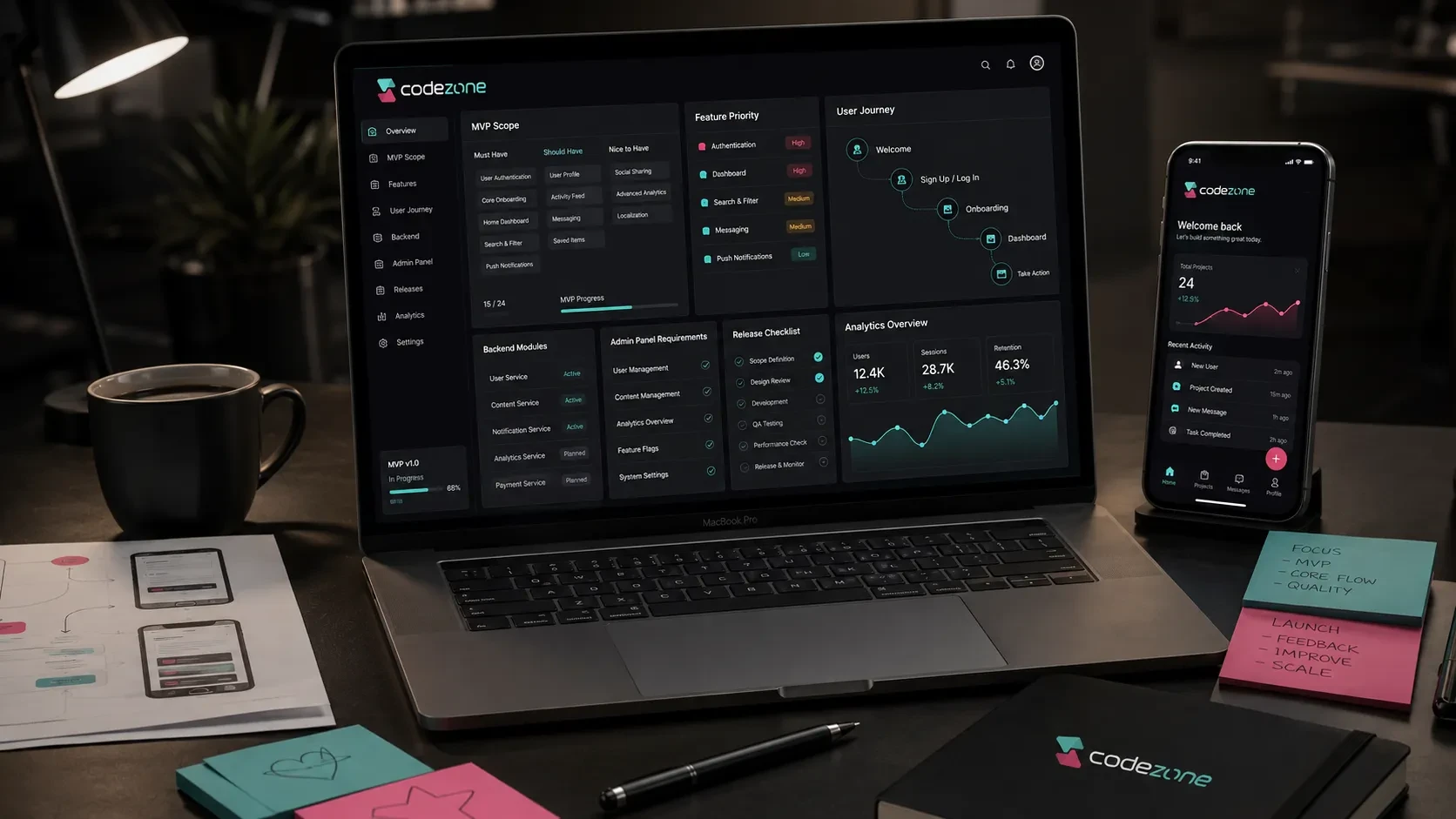
One of the most important decisions in a mobile app project is deciding what should be included in the first release.
Product ideas often begin with a long list of features. User accounts, payments, notifications, messaging, maps, reporting, social features, integrations, personalization, and administrative tools can quickly become part of the same roadmap.
Building all of them at once does not necessarily create a stronger first version.
A more effective approach is to identify the core experience users need, define the systems required to support that experience, and separate essential functionality from features that can be introduced later.
The first release should be complete enough to provide real value, reliable enough to be used in production, and measurable enough to guide future product decisions.
Start With the Core User Need
The first-release scope should begin with the main reason users will open the application.
A useful question is:
What is the most important outcome a user should be able to achieve with this app?
For a reservation application, that may be finding an available time and booking an appointment.
For an e-commerce application, it may be discovering a product, purchasing it, and following the order.
For a field operations application, the core experience may be viewing an assigned task, completing the work, and reporting the result.
Once this central outcome is clear, the product team can identify which features are genuinely required to make it possible.
The first version should protect this core journey from unnecessary complexity.
Define the Main User Journey From Beginning to End
A feature list alone is not enough to define a mobile product.
The team should map how the user moves through the application.
For example, a reservation flow might include:
Open the application
Sign in or continue as a guest
Select a service
Choose a date and time
Confirm the reservation
Receive confirmation
View the upcoming appointment
Every step may create supporting requirements.
Sign-in requires authentication. Available times require backend data. Confirmation may require notifications. The appointment needs to be visible to the operations team.
Thinking in terms of complete journeys makes hidden requirements easier to identify.
It also prevents the first release from containing several disconnected features while the primary experience remains incomplete.
Separate Essential Features From Future Enhancements
A practical first-release plan can divide ideas into three groups.
Essential for the First Release
These are features without which the core user journey cannot work.
Examples may include:
Sign-up and login
Basic profile management
Main product flow
Required backend services
Essential notifications
Payment or reservation where necessary
Basic admin controls
Error and empty states
Analytics for critical events
Valuable After Real Usage
These features may improve the experience but do not need to exist before users can receive the product’s main value.
Examples may include:
Advanced filters
Personalized recommendations
Loyalty systems
Referral programs
Advanced reporting
More detailed notification scenarios
Social features
Extended profile customization
Long-Term Product Ideas
Some capabilities may belong to the broader product vision while having limited relevance to the first release.
They should remain visible in the roadmap without becoming immediate development requirements.
This distinction allows the team to protect future ideas without turning all of them into launch blockers.
The First Release Is Not a Low-Quality Version
Reducing scope should not mean reducing product quality.
The first release still needs to provide a reliable experience.
Core areas such as security, performance, accessibility, error handling, and data integrity should be treated as production requirements.
A focused first version should feel intentional.
Users should not encounter incomplete flows simply because a feature was categorized as part of the MVP.
For example, if payment is included in the first release, successful payments, failed payments, loading states, confirmation screens, and transaction handling all need to work properly.
The scope may be smaller, but the experiences included within that scope should be complete.
Backend Requirements Should Be Defined Together With Mobile Screens
First-release planning should not be based only on the number of screens in the mobile interface.
A visually simple feature can require significant backend work.
The project should define areas such as:
User accounts
Data models
Authentication
User roles
API structure
Notifications
File management
Payment logic
Subscription logic
Integrations
Admin panel requirements
For example, an application may have only one screen showing a customer’s current subscription.
Behind that screen, the system may need to manage plans, subscription status, payment history, renewal dates, permissions, and billing events.
These requirements affect development effort even when they are not directly visible in the mobile interface.
The first-release scope should therefore represent the complete product system, not only the app screens.
Define Which Admin Features Are Required at Launch
Many mobile applications require an operational interface for the company team.
If users create data in the mobile app, internal teams may need to review or manage that information.
The first admin version may include:
User management
Order or reservation management
Content management
Application or request management
Notification controls
Basic roles and permissions
System settings
Basic reporting
The goal is not to build a complete enterprise management platform before the mobile product launches.
The goal is to provide the controls required for the first version to operate safely and efficiently.
Additional reporting, automation, advanced permissions, or bulk operations can be added as operational needs become clearer.
Identify Critical Integrations Early
External integrations can significantly affect the scope of a mobile application.
Possible integrations include:
Payment providers
CRM
ERP
Maps
SMS services
Email providers
Calendar systems
File storage
Shipping services
Analytics platforms
Each integration introduces its own technical requirements, test scenarios, and dependencies.
The project should decide which integrations are essential for the first release and which can wait.
If an integration is central to the product’s value, it belongs in the initial architecture.
If it mainly automates a process that can reasonably be managed manually during the first stage, it may be suitable for a later phase.
Prioritize Features Around User Value
When several features compete for the first release, priority should be determined according to the value they create.
Useful questions include:
Does the core journey work without this feature?
Does it solve a real user need?
How frequently will users need it?
Does it directly support the business model?
Is it required for operations?
Does another feature depend on it?
Can the same need be handled more simply in the first version?
Will launching without it prevent meaningful product validation?
This prevents features from being prioritized only because they sound innovative or impressive.
A feature should earn its place in the first release by supporting the product’s core value or operational requirements.
Plan Analytics Before the App Goes Live
The first release should create useful information for the next version.
Analytics therefore needs to be included in the initial scope.
Important events may include:
App opened
Registration started
Registration completed
Login completed
Core feature started
Core feature completed
Payment initiated
Payment completed
Notification opened
Error encountered
The exact event structure depends on the application.
What matters is being able to understand whether users can reach the product’s main value.
Without this measurement layer, the team may launch a focused first version but still lack the information needed to decide what should happen next.
Define Success Before Launch
The team should know what a successful first release looks like before the product reaches users.
Success should not be defined only by the number of downloads.
Depending on the product, useful signals may include:
Registration completion rate
Core journey completion rate
Active users
Repeat usage
Orders
Reservations
Subscriptions
Customer requests
Retention
Technical stability
For example, the first goal of a reservation application may be to confirm that users can discover available appointments and complete bookings successfully.
For another product, the key question may be whether users return regularly to complete operational tasks.
Clear success criteria make post-launch evaluation much more useful.
Plan the Second Phase Before Completing the First
Defining the first release does not mean ignoring future development.
The team should maintain a visible roadmap containing features that may follow the initial launch.
A roadmap can include:
First Release
Core user journey
Basic accounts
Required backend
Essential admin tools
Critical integrations
Analytics
Second Phase
Experience improvements
New filters
Additional user roles
More reporting
Expanded notifications
Later Phases
Automation
Personalization
Advanced integrations
Loyalty systems
AI-assisted capabilities
The roadmap should remain flexible.
Once the application is used by real people, assumptions may change.
A feature originally planned for the second phase may become less important, while an unexpected user need may become the next priority.
Use Real User Behavior to Shape Future Releases
After launch, product planning moves from assumptions toward evidence.
Teams can begin evaluating:
Which screens users visit most
Which flows they complete
Where they abandon important actions
Which features are used repeatedly
Which errors appear
What users request through support
What keeps users returning
Which actions create business value
This information should influence future versions.
The purpose of a focused first release is not simply to launch sooner.
It is to create a product that can teach the team what should be built next.
Codezone’s Approach
At Codezone, we define the first release around the product’s core user experience, business goals, technical requirements, and operational needs.
We begin by identifying the primary user journey and the value the application needs to deliver from its first production version.
From there, we determine which mobile features, backend services, admin controls, integrations, notifications, and analytics are required to support that experience.
Features that strengthen the product without being essential to the first journey are organized into later phases.
This creates a focused first release while keeping the broader product vision visible.
The result is a mobile product that can reach real users with a clear purpose and continue evolving through usage data and feedback.
Conclusion
The scope of a mobile app’s first release should be defined around the smallest complete experience that provides meaningful value to users.
Core user journeys, backend requirements, admin operations, integrations, security, analytics, and technical quality should all be considered together.
The objective is not to include as few features as possible.
It is to identify which features are truly necessary for the product to work, reach users, and generate useful information for the next stage of development.
A well-defined first release creates focus for the development team and a stronger foundation for the long-term product roadmap.
Frequently Asked Questions
What should be included in the first version of a mobile app?
The first version should include the features required to complete the product’s core user journey, together with the backend, admin controls, integrations, security, and analytics required to support that experience.
Should every planned feature be included in the first release?
No. Features that improve the experience but are not necessary for the core value can be planned for later phases and prioritized using real user behavior after launch.
Is the first release the same as a prototype?
No. A prototype is generally used to explore or demonstrate an idea. The first production release is a working product that real users can use and that can generate measurable product data.
Should payment be included in the first release?
If payment is necessary for users to complete the product’s main value flow, it should generally be part of the first release. If it is not essential to validating the primary experience, it may be introduced later.
What should be measured after the first release?
Active usage, completion of the main user journey, retention, conversion events, technical errors, user feedback, and the areas generating the most support requests can all help determine future priorities.