
How Can a Corporate Website Generate More Customer Inquiries?

To generate customer inquiries through a corporate website, companies need to welcome visitors with the right message, explain services clearly, build trust, and make it easy for users to get in touch.
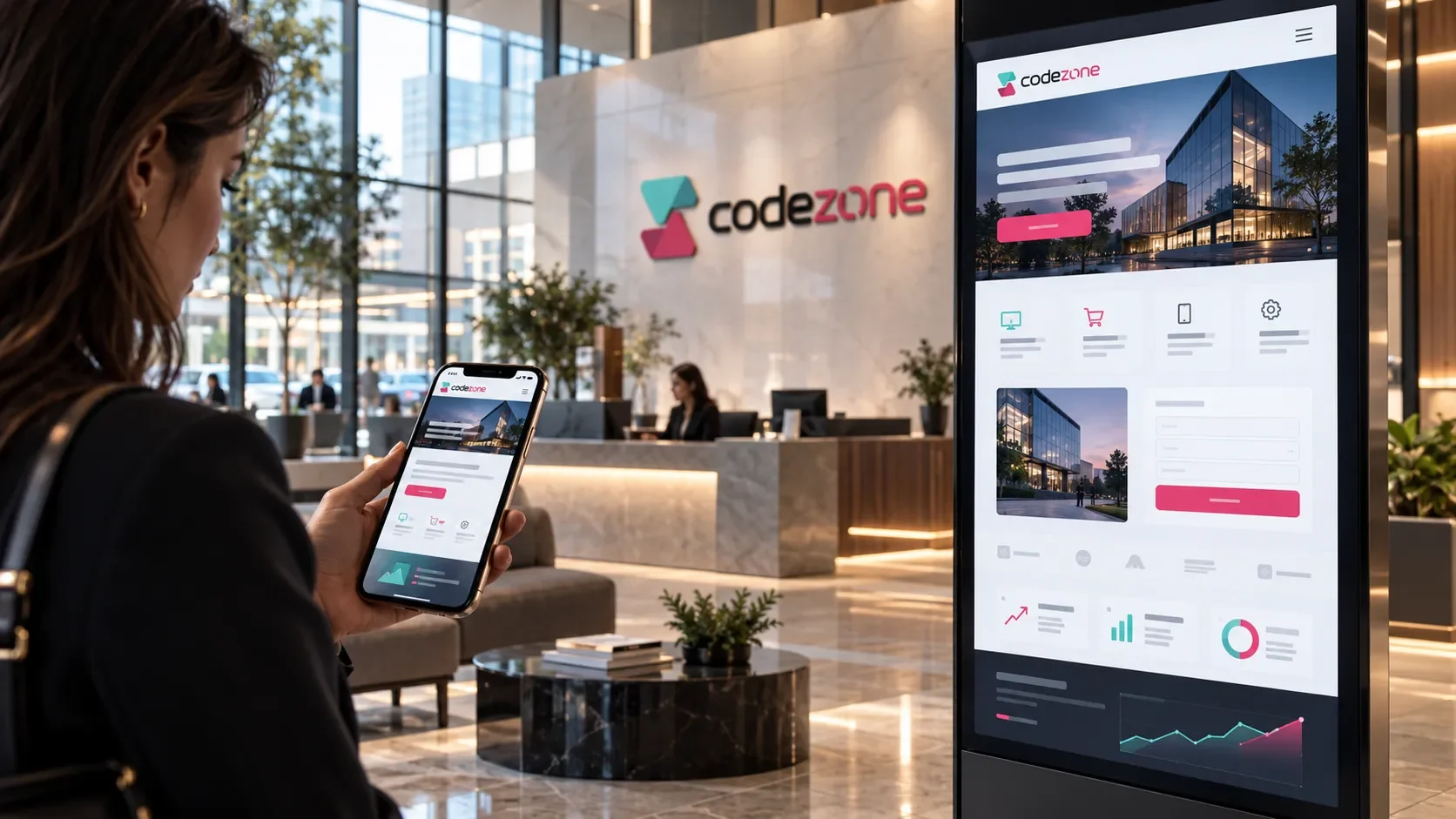
How Are Customer Inquiries Generated Through a Corporate Website?
One of the main outcomes expected from a corporate website is generating customer inquiries. A visitor arrives on the website, explores the company, evaluates its services, and, when ready, moves toward a contact form, quote request, phone call, or WhatsApp action.
For this process to work effectively, the website needs to welcome visitors with the right message. Users should quickly understand which service they are exploring, how the company approaches that service, and what they can do next.
Customer inquiries are not determined by visitor numbers alone. How easily users move through the website, how clearly they understand the services, how trust is established, and how easily they can reach the contact step all directly influence the outcome.
Customer inquiries become stronger when a website presents the right information to users in the right order.
For this reason, companies looking to generate more inquiries should evaluate their messaging, page flow, service presentation, CTAs, form structure, trust elements, performance, and measurement framework together.
The Hero Section Should Welcome Users With the Right Message
On a corporate website, users often form their first impression within the first few seconds.
The opening section should clearly communicate what the company does, who it serves, and how it can help the user.
A well-structured hero section reassures visitors that they are in the right place.
When the main headline, supporting copy, visual structure, and CTA work together, users are more likely to continue exploring the page.
Which Questions Should the Hero Section Answer?
A strong hero section should quickly answer:
What does this company do?
Which services does it offer?
Which type of customer does it serve?
Which user need does it address?
What is the next step?
What kind of first impression does the company create?
For example, instead of using a broad headline that communicates only brand atmosphere, a headline that combines the service with the value it provides to the user can work more effectively.
We explore this topic in more detail in How Should the Hero Section of a Corporate Website Be Structured?.
Services Should Be Explained in the User’s Language
For a customer inquiry to occur, users need to understand the service easily.
On corporate websites, service content should demonstrate the company’s expertise while staying close to the user’s actual needs.
A service page should clarify what the service includes, who it is suitable for, how the process works, and what kind of outcome the user can expect.
After reading the page, the user should be able to think:
“This is relevant to what I need.”
What Information Should a Service Page Include?
Service pages may include:
What the service is
Which need it addresses
Which companies it is suitable for
How the process works
What is included in the scope
Which information the user needs to provide
Frequently asked questions
Relevant project or reference examples
A clear CTA
This structure does more than provide information. It also gives users the context they need to make a decision.
You can explore a more service-focused website structure in How Should a Service-Focused Corporate Website Be Structured?.
CTAs Should Move Users Toward the Decision Step
To generate customer inquiries through a website, the next step should be clearly visible.
A CTA is the element that tells users which action they can take within the page.
While reading a service page, users naturally expect a way to share their project, request a quote, or arrange a meeting.
For this reason, the CTA copy should match the intent of the surrounding content.
How Should CTA Copy Be Structured?
CTA wording should stay close to the user’s intent.
For services such as corporate websites, custom software, e-commerce, or landing pages, examples may include:
Tell Us About Your Project
Send a Quote Request
Share Your Requirements
Let’s Plan Your Website
Let’s Digitalize Your Sales Process
A CTA is more than the button label itself.
Its placement, surrounding copy, position within the page flow, and connection to the form all influence the user’s decision.
Where Should CTAs Be Placed?
On a corporate website, CTAs may appear:
In the homepage hero section
After service cards
On service detail pages
After project or reference sections
At the end of blog articles
After FAQ sections
In a persistent contact or quote section
Inside the mobile menu
Users should be able to take action when they reach a decision point.
When CTAs appear naturally throughout the page flow, the contact step becomes easier to discover.
The Quote Request Form Should Make It Easy to Get Started
The form structure is one of the most important elements in generating customer inquiries.
A well-designed quote request form helps users explain their needs.
Rather than treating the form simply as a place to collect information, it can be designed as a short guided introduction to the project.
The form structure should match the company’s sales process.
For some businesses, a short contact form may be sufficient.
For more comprehensive services, fields such as project description, budget range, and expected timeline can provide a stronger starting point.
Which Fields Can Be Included in the Form?
A corporate website quote request form may include:
Full name
Email
Phone
Company name
Service of interest
Project description
Existing website
Budget range
Target launch date
Additional notes
Form fields should make it easier for users to explain what they need.
For example, a short helper message in the project description field can guide the user toward sharing more useful information.
We explain how this structure can be planned in more detail in How Should a Quote Request Form Be Structured on a Corporate Website?.
Trust Elements Should Support the Decision Process
Before contacting a company, users want to feel confident about their decision.
Especially in B2B services, decisions are not based on price or design alone.
Users want to understand what the company has done before, how it works, which areas it has experience in, and how the process will be managed.
For this reason, trust elements should be a natural part of the website.
Users should be given clear, concrete, and balanced information.
What Can Be Included in Trust Sections?
Elements that can support trust on a corporate website include:
Project examples
References
Industry experience
Working process
Technologies used
Post-launch support information
Team approach
Frequently asked questions
Clear company information
Blog and educational content
Codezone’s project examples across different industries provide useful references for seeing how trust, scope, and industry alignment can work together on a corporate website.
Performance and Mobile Experience Support Inquiry Generation
Fast page loading, comfortable mobile reading, and forms that are easy to use on a phone directly support customer inquiries.
This becomes even more important for traffic arriving from advertising, organic search, and social media.
Performance may appear to be a technical topic, but it sits at the center of the user experience.
Users expect the website to load quickly, feel easy to navigate, and allow them to reach the contact step without friction.
Areas That Should Be Reviewed
Technical and experience-related factors that can affect inquiry performance include:
Page load speed
Mobile compatibility
Image optimization
CTA visibility
Form usability
Menu structure
Access to service pages
Page scrolling experience
Button usability
Error messages
Thank-you page
Conversion tracking
We explore the relationship between website performance and customer inquiries in more detail in How Does Corporate Website Performance Affect Customer Inquiries?.
The Page Experience Should Reflect the Visitor’s Traffic Source
Not every user arrives on the website with the same intent.
A visitor arriving through an organic Google search may be researching a topic.
A visitor coming from Google Ads may want to request a quote more quickly.
A social media visitor may be discovering the company for the first time.
A referral visitor may already be closer to making a decision.
For this reason, traffic sources should also be considered when working to increase customer inquiries.
Each channel influences what the user expects and which information they need on the page.
How Does User Expectation Change by Traffic Source?
Google Ads users expect a clear message and direct CTA.
Organic search users usually look for more detailed information.
Social media users pay attention to brand perception and visual language.
Referral users often look for project examples and easy contact options.
Blog visitors want to understand the topic and see what they can do next.
These different intentions require a more deliberate page structure.
Pages created specifically for advertising traffic may benefit from a more focused landing-page structure.
We explain this approach in detail in How Should a Corporate Landing Page for Google Ads Be Structured?.
Content and SEO Improve Inquiry Quality
The quality of customer inquiries is just as important as the number of inquiries.
When the website responds to the right search intent, the visitors arriving on the site are more closely aligned with the services the company actually provides.
SEO content is not created only to attract traffic.
When structured effectively, it educates users, builds trust, and guides them toward relevant service pages.
Which Areas Should Be Reviewed for SEO?
To increase customer inquiries through a corporate website, companies can review:
Which pages receive traffic?
Which search intents do those pages address?
Are the service pages strong enough?
Are blog articles connected to relevant services?
Does the internal linking structure guide users toward the right pages?
Do meta titles and descriptions create the right expectation?
Are page headings close to the language users actually search with?
Is older content up to date?
Are quote and contact actions visible within the content?
You can explore the broader structure in How to Develop an SEO-Friendly Corporate Website.
Measurement Makes Improvement Opportunities Visible
To generate more customer inquiries through a corporate website, companies need to look at the data.
How many visitors arrive?
Which pages do they explore?
Do they reach the form page?
Do they click CTA buttons?
How does behavior differ on mobile?
These data points make the user’s decision journey through the website easier to understand.
This makes it easier to identify which areas should be improved.
Which Metrics Can Be Tracked?
Metrics that can be monitored on a corporate website include:
Total visitors
Traffic sources
Service page visits
CTA clicks
Form starts
Form submissions
Phone clicks
WhatsApp clicks
Email clicks
Thank-you page views
Scroll depth
Mobile vs. desktop conversion differences
Pages with the highest exit rates
Measurement should not be used only for reporting.
It should help identify where improvements can be made.
For example, if service pages receive strong traffic but form clicks remain limited, the CTA structure can be reviewed.
If many users reach the form page but the submission rate remains below expectations, the form fields or technical implementation can be evaluated.
The Difference Between Optimization and a Full Redesign Should Be Evaluated Correctly
Increasing customer inquiries does not always require rebuilding the entire website.
In some cases, improvements to messaging, CTAs, forms, content, and performance may be enough.
In other cases, the website structure, technology, design, and content architecture may require a more comprehensive redesign.
Making this distinction correctly helps determine the right scope.
If the need can be addressed through targeted improvements, the process can move more quickly.
If the underlying structure requires broader changes, a redesign plan can provide a stronger foundation.
Signs That a More Comprehensive Redesign May Be Needed
A larger redesign may be worth considering when:
The website design no longer reflects the brand effectively
The mobile experience does not provide the expected level of usability
CMS usage has become difficult for the internal team
The service structure no longer matches the company’s current offering
The SEO foundation has become fragmented
Performance issues have become persistent
Forms and conversion activity cannot be measured properly
New services, industries, or language structures need to be introduced
We explain where to begin with this process in Where Should Companies Start When Planning a Website Redesign?.
Codezone’s Approach
At Codezone, we evaluate customer inquiry generation through the user’s decision journey.
We consider why users arrive on the website, what they see in the first screen, how they evaluate services, and how they move toward the contact step.
We approach this process through messaging, page flow, service presentation, CTA placement, quote request forms, trust elements, performance, SEO, and measurement.
This makes it easier to identify where the website can become clearer, faster, and more decision-focused.
With this approach, the corporate website becomes a digital touchpoint that responds more effectively to user needs, builds trust, and collects customer inquiries in a more structured way.
Conclusion
For companies looking to generate more customer inquiries through their corporate website, the first step is understanding how current visitors move through the site.
Which message do users see first?
How clearly do they understand the services?
How easily can they reach the contact step?
When the hero section, service pages, CTA structure, quote request form, trust elements, mobile experience, performance, SEO, and measurement are evaluated together, opportunities to strengthen inquiry generation become easier to identify.
A well-structured corporate website does more than introduce the company.
It helps users understand their needs, build confidence, and move toward the right contact action.
This turns the website into a stronger customer inquiry channel.
Frequently Asked Questions
How Can a Corporate Website Generate More Customer Inquiries?
Customer inquiries can be increased by improving the hero section, service presentation, CTA structure, quote request form, trust elements, mobile experience, performance, SEO, and measurement framework together.
Does Spending More on Advertising Increase Customer Inquiries?
Advertising can bring more visitors to the website.
For that traffic to turn into inquiries, the page message, CTAs, forms, and trust elements need to be structured effectively.
Does the Quote Request Form Affect Customer Inquiries?
Yes.
When the quote request form guides users clearly, it can generate more qualified inquiries.
Form fields, helper text, service selection, and the thank-you page all influence this process.
Does a Website Need to Be Completely Redesigned to Increase Inquiries?
Not always.
For some websites, improvements to messaging, CTAs, forms, content, and performance may be sufficient.
If the underlying structure, technology, mobile experience, or SEO foundation requires broader change, a redesign may provide a stronger solution.
Which Metrics Should Be Tracked for Customer Inquiry Generation?
CTA clicks, form starts, form submissions, phone and WhatsApp clicks, service page visits, traffic sources, mobile behavior, and thank-you page views can all be tracked.